About Foamcraft.org
Why the Milk Matters More Than You Think
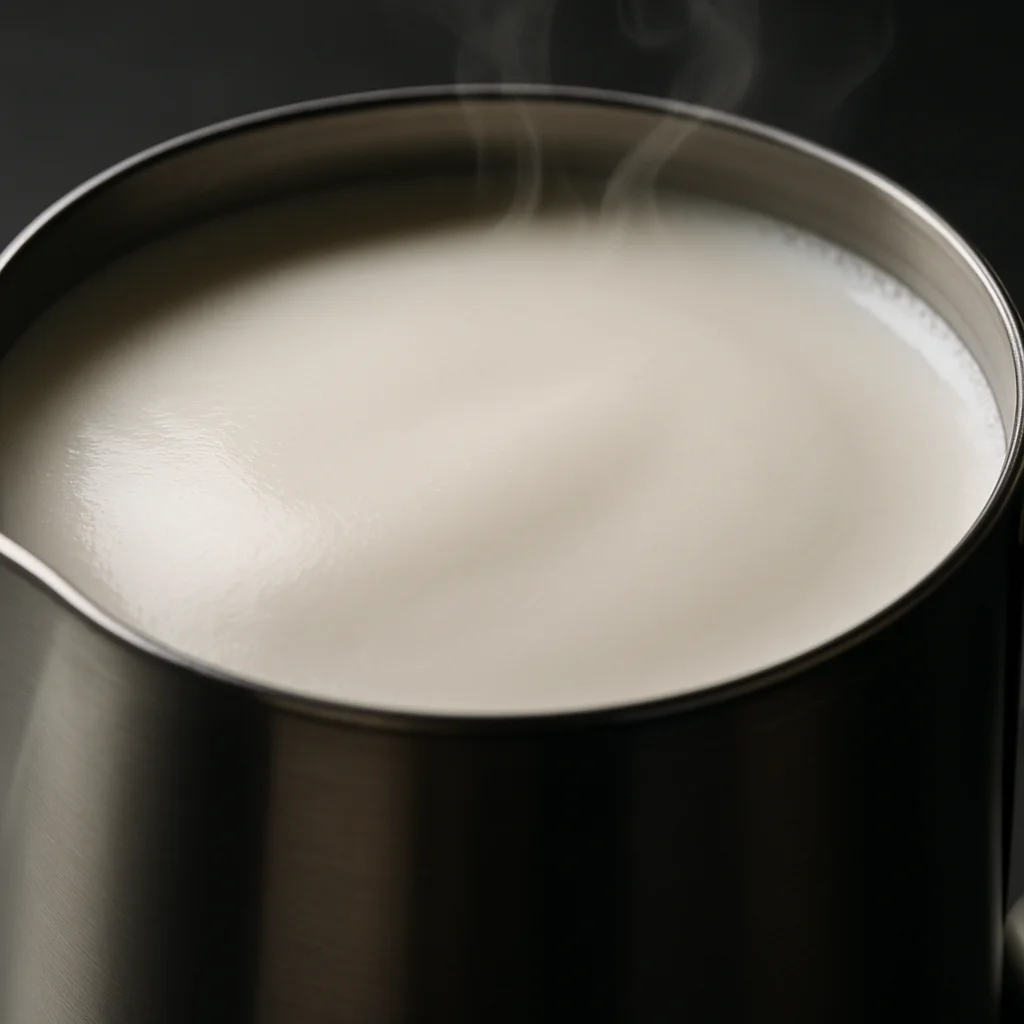
Most resources on latte art begin and end with the pour. They diagram the wrist motion for a rosetta, annotate the angle of the pitcher lip, and illustrate the height at which the stream should break the crema’s surface. All of that is useful — and yet none of it addresses the reason most latte art fails before the pitcher ever tilts. The foam itself is wrong: too stiff, too thin, too full of visible bubbles, or too quickly decayed. The pattern was lost not in the pour, but in the steam.
Foamcraft.org exists because the milk side of latte art is a subject deep enough to deserve its own dedicated reference. The behavior of milk under steam is governed by protein denaturation, fat emulsion, bubble physics, and temperature kinetics — a web of interacting variables that shifts the moment you swap from whole dairy to oat, or from a four-hole tip to a single-hole tip, or from a 140°F target to a 160°F one. Understanding those variables, in the kind of layered detail that actually changes what happens in the pitcher, is the single purpose of this site.
What This Site Covers
The scope here is deliberately narrow. Foamcraft.org does not cover espresso extraction, grinder calibration, or water chemistry — not because those subjects lack importance, but because they are already well served elsewhere. What is less well served, and what this site addresses exclusively, is the journey milk takes from cold liquid in a pitcher to the integrated, pourable microfoam that makes latte art possible.
That journey is explored across several dimensions:
- Technique — the physical mechanics of stretching and polishing, the role of the steam wand’s position and angle, and the relationship between timing and temperature. The Steaming Technique guide covers this in detail.
- Milk chemistry — how casein and whey proteins stabilize foam, how fat content dampens or enriches texture, and how lactose caramelization influences perceived sweetness. The Milk Chemistry reference page lays out the underlying science.
- Foam physics — bubble diameter distribution, Ostwald ripening, drainage rates, and the structural differences between stiff froth and true microfoam. The Physics of Foam page is the deepest thread on this topic.
- Milk varieties — how different dairy fat percentages and plant-based alternatives behave under steam, each with its own protein profile, fat structure, and foaming personality. The Dairy Milk Comparison and Plant-Based Milk Guide pages map this territory.
- Troubleshooting — diagnosing specific foam failures and tracing them back to their causes, whether those causes are technique, temperature, or the milk itself. The Troubleshooting guide is built for exactly this kind of problem-solving.
How the Content Is Built
Every page on this site is written with the grain of practical experience and cross-referenced against available food science literature. The goal is not to simplify the subject into a list of quick tips, but to give readers enough understanding of what is actually happening inside their pitcher that they can adapt to any milk, any machine, and any ambient condition. A rule like “stop stretching at 100°F” is useful only until conditions change; understanding why early stretching matters — because proteins unfold and trap air more readily within a specific thermal window — remains useful forever.
The writing aims to be precise without being inaccessible. Where a concept from food science or physics is introduced, it is woven into the practical context of steaming milk, not left as an abstraction. The site is a reference, not a textbook, and the intent is that any barista, home enthusiast, or curious reader can move between pages and find the specific thread they need.
Where to Start
For readers arriving for the first time, the Microfoam Fundamentals page offers the clearest entry point — it establishes what good foam looks, feels, and behaves like, which is the baseline against which every other page on this site makes sense. From there, the Steaming Technique guide and the Milk Chemistry reference provide the two complementary lenses — one mechanical, one molecular — through which foam quality can be understood and improved. The FAQ page gathers the most common questions into a single, browsable format for those with a specific problem already in mind.